• Skip to main content
MH Logo_1
  • About
  • Neighborhoods
  • Listings
  • My Favorite Spots
  • Home Tours
  • Testimonials
  • Get In Touch
Hide Search

Mike Hardesty

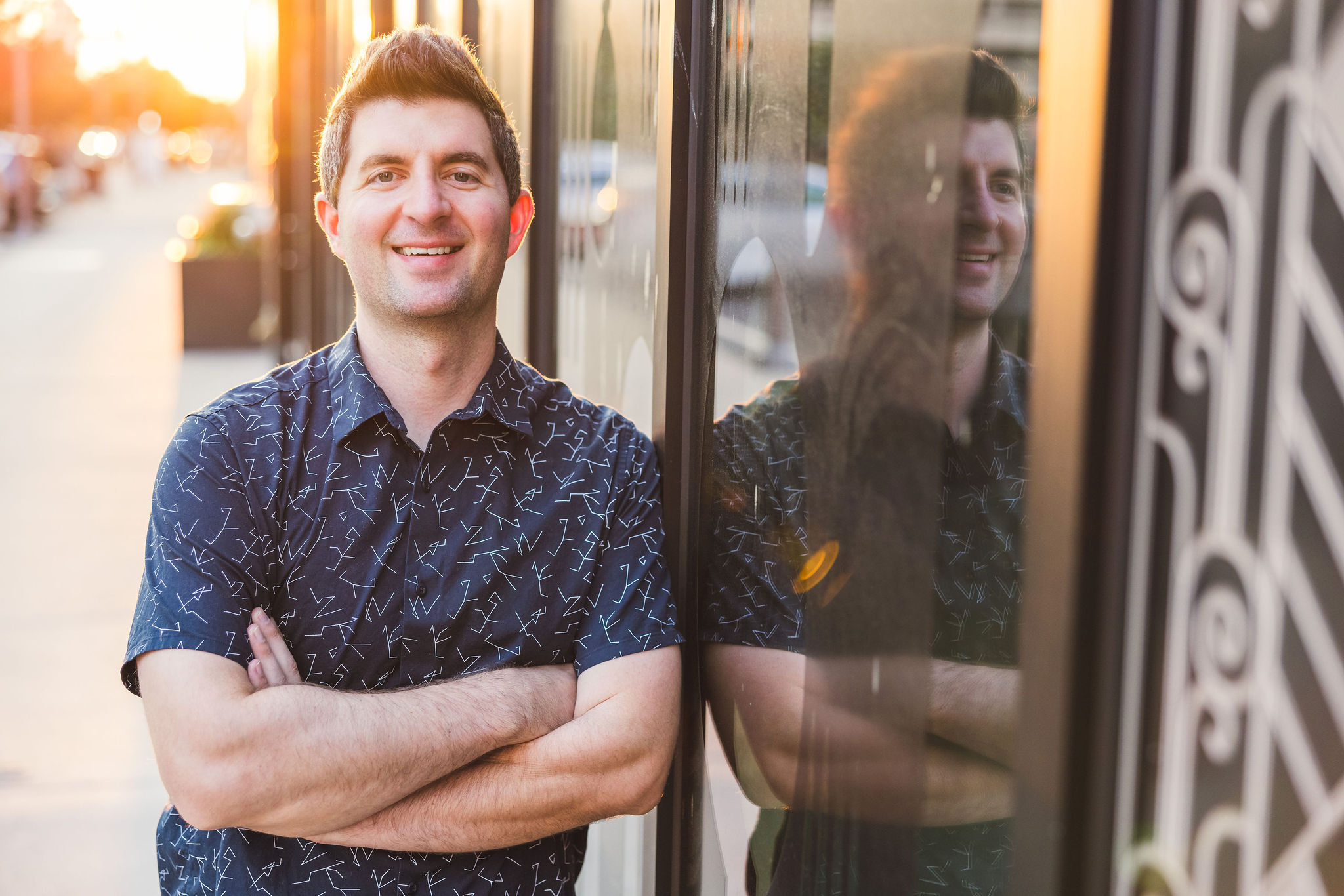
Hi, I'm Mike

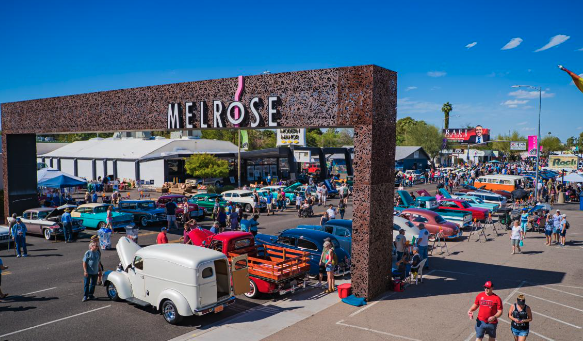
I once owned a vintage shop in the Melrose district because I love everything about historic and mid century homes. So much so, that now I am a Realtor specifically helping others capture that same charm for their lives. Whether you are looking to buy or sell, I'm happy to partner with you in your journey.
Get In Touch
Book a 30-Minute Call
aaron-kes-photography-michael-hardesty-realtor-headshots-6

Featured Neighborhoods

Explore

My Listings

View

My Favorite Spots

Learn More

Home Tours

Learn More

Featured Neighborhoods

See More

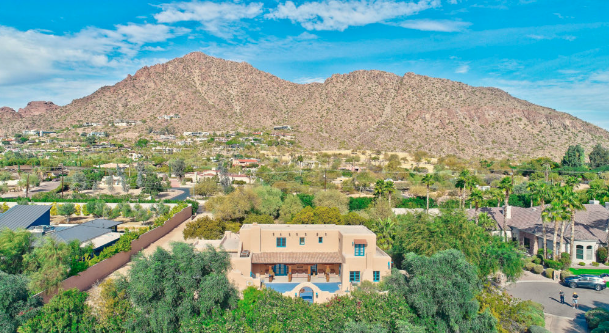
Arcadia

Known for its graceful blend of vintage charm and modern amenities, Arcadia offers a diverse range of homes. From sprawling estates boasting stunning mountain views to cozy ranch-style abodes, there is a residence to suit […]

Read More

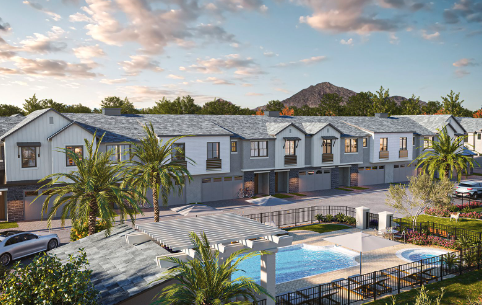
Willo

The Willo Historic District is a beloved neighborhood located in central Phoenix, known for its beautifully preserved historic homes, tree-lined streets, and a strong sense of community. Willo is recognized as one of Phoenix’s most […]

Read More

Woodlea

Woodlea Historic District showcases a stunning array of architectural styles, ranging from Spanish Colonial Revival to Tudor and Mid-Century Modern. As you explore its picturesque streets, you’ll encounter beautifully restored residences, each with its own […]

Read More
BG Blue Shape

My Story

I once owned a vintage shop in the Melrose district because I love everything about historic and mid century homes. So much so, that now I am a Realtor specifically helping others capture that same charm for their lives. Whether you are looking to buy or sell, I'm happy to partner with you in your journey.

Read More

Client Testimonials

star 1_1

Above and Beyond

We had an amazing experience working with Michael as our realtor. We did not live locally when we needed to sell our property, and he went above and beyond to help get the house ready for sale, including meeting companies for repairs, staging and follow-up. We then had multiple offers on our home within days of listing and were able to pick a wonderful family to sell it to. Would absolutely recommend Michael and use again if we ever move back to the area!

— Tina W.

star 1_1

Always One Step Ahead

Can’t say enough about Michael and his skills as a sellers and buyers realtor. I’ve had the pleasure of working with him 3 times now and every time I’m completely comfortable and left with less worries than I had with previous realtors. He’s always on his game and always one step ahead. He’s both honest and realistic however, he always game to try to push the envelope. Although I don’t look forward to selling a house again, it’s an inevitable situation for us and I take comfort in knowing Michael will be there for us once again.

— Becky S.

star 1_1

A Knowledgeable Professional With Your Interests in Mind

We would 100% suggest using Mike if you’re looking for a home, have already referred family members to him, and would absolutely do so again. It’s easy to get caught up in shiny social media real estate accounts run by people that don’t actually know what they’re doing, or “on-line house browsing”, underestimating the importance of an experienced realtor. Mike will put you at ease knowing that there’s a knowledgeable professional with your interests in mind, likely saving you time, money, and headaches, while helping you acquire your perfect home!

— Casey C.

Read More
row shape yellow

Latest from Instagram

Coming Soon! 1 Bed, 1 bath, 690 SF with over 100 Coming Soon!

1 Bed, 1 bath, 690 SF with over 100 years of history. 

DM me for details.

Listed by Mike Hardesty with @azarchitecture

Staging by @popstagingphx
I’ve spent a ridiculous amount of time uncoverin I’ve spent a ridiculous amount of time uncovering the history of 300 Bowl, a building so rich with stories I could probably spend the next month making videos about it. But my real goal was simpler: to finally confirm and credit the architects behind this mid-century masterpiece, and to explain why it still matters to this city. Bowling has been the backdrop of my life. I wouldn’t be who I am without the community I found on the lanes.

For decades, even the original ownership was a mystery. Digging through articles of incorporation and early contracts finally put names to the vision: Ira Karon, Raleigh Karon, and Jacob Greenberg, the people who brought 300 Bowl into existence.
Along the way, the building gave up a few secrets of its own:

The Lane Shift: What we now know as Lane 17 was once Lane 1. Lanes 1 through 16 came later, during a major 1962 expansion. This explains the oversized mechanics shop sitting just outside today’s Lane 17.

Hidden History: Beneath decades of renovations, the original fountains and flooring are still there, literally buried in time.

Live-in Legacy: A former manager once lived on-site. Tucked inside the office is a fully equipped studio apartment, complete with a bathroom and hot shower that still works.

Secret Passageways: A blocked-off roof crawlspace once allowed staff to move from the front of the house to the back, unseen.

I’ll probably dive into the competitive sagas another time. For now, I’m just grateful to finally put real facts behind one of my favorite buildings and to shine a light on a true local icon.
“With White Gates gone, honoring Al Beadle’s l “With White Gates gone, honoring Al Beadle’s legacy through the homes that remain feels more important than ever.” — Scott Jarson

It was a busy week of showings and research for a story I’m working on about one of my favorite buildings in Phoenix, but I was genuinely excited to hear the good news on Wednesday that the Novak House had officially been recorded and its next chapter had begun.

Nearly 40 years after designing White Gates, Al Beadle was still pushing the envelope of modernist architecture. His work remained as bold and innovative as ever, proving that great design has no expiration date.

Congrats to both the buyers and sellers on a successful transaction of such an important home. 

Sold by Scott Jarson with @azarchitecture
Over the holiday break, I reached out to my friend Over the holiday break, I reached out to my friend Tony to wish him happy holidays and ask what he knew about an area once known as “The Deuce.” I told him I had been reading old stories and interview transcripts and was fascinated by the idea that this mysterious, mischievous part of town, where people worked hard and played harder, existed not that long ago and is now completely gone.

Tony immediately understood my curiosity. He said he had been going down his own rabbit hole, but his focus was Chinatown and the Central Wholesale Terminal.
I will be honest. I had absolutely no idea what the Central Wholesale Terminal was. I knew that the area where the Suns and Diamondbacks play today was once filled with culture, produce, distribution, and trade, but I had never heard of the Terminal. And it turns out it was an actual building and a working business. Who knew?

So we set a date to explore where the Terminal once thrived. Today, it is the Jefferson Street Parking Garage. But if you look closely, parts of the exterior design were inspired by the original Central Wholesale Terminal, along with a few plaques commemorating its importance, details I have walked past dozens of times without noticing.

While I plan to do a full series on the Warehouse District and will absolutely dive deeper into “The Deuce,” I am grateful Tony introduced me to the Central Wholesale Terminal and collaborated on this story. At the end of the day, few things matter more than culture, community, and the economic hubs that not only fed the city, but helped Phoenix grow into the powerhouse it is today.

I hope you enjoyed learning about it as much as I did.
I ended up learning a lot more than just the desig I ended up learning a lot more than just the design of the Valley National Bank at 4401 E Camelback. I discovered how important Walter Bimson was to Phoenix’s growth and how many forward-thinking ideas he introduced at Valley National Bank, like small checking accounts, small-business loans, consumer credit, small savings accounts, drive-in banks, and branch banking. In a way, he was an architect for the whole city. There is no telling how many truly important loans and opportunities he provided, helping shape the people and businesses that would define Phoenix for decades. Perhaps that is why Frank Lloyd Wright called Bimson “a humane banker, believe it or not.”

Outside of banking, Bimson was a major art collector and one of the people who helped make the Phoenix Art Museum possible. He also personally guaranteed the construction of Wright’s design for Gammage Auditorium at ASU. It is a name and a person more people should know.

Then there is Frank Henry. Inspired by Frank Lloyd Wright and the first graduate of ASU’s School of Architecture in 1960, where he studied under Charles Montooth and Fred Langhorst, he designed what many consider one of Phoenix’s greatest buildings and helped raise the bar for everyday architecture in the city.

Beyond his own work, Frank spent decades teaching, mentoring, and advocating for Arizona architecture. He taught at the Frank Lloyd Wright School of Architecture, gave tours and lectures, wrote about the Southwest, and was deeply involved in preservation, including helping save the David and Gladys Wright House in Arcadia. We can only hope his designs live on so future generations can appreciate them the way we have. #discoverphoenix
Do you have a favorite mural or muralist? Tag them Do you have a favorite mural or muralist? Tag them below.

I was first introduced to the mural scene back in 2014 when I owned Zinnias at Melrose. We collaborated with artists like Ashley Macias, Chris Sanchez (Volar), Jesse Perry, and JB Snyder, and I was immediately struck by their talent, curiosity, and work ethic.

Over time, most of the building ended up covered in murals. People stopped by daily to take photos, do shoots, or just spend a few minutes looking. What had been a pretty ordinary structure suddenly went from something you passed without noticing to something people paused for.

Nearly twelve years later, I still find myself driving around Phoenix looking for new murals, paying attention to the scale, the detail, and the thought behind them. I’m glad the city has made space for local artists, and through this series I want to share as many murals as I can, along with some context and the stories behind them when possible.

PS: If you see your work in the reel and you’re not tagged, please send me a DM. I want to make sure credit is given where it’s due.
Comment “OPEN” and I’ll DM you the listing l Comment “OPEN” and I’ll DM you the listing link to this iconic unit at Al Beadle’s Bridgewood North 40 in Arcadia. There’s an Open House this Saturday from 9:00 a.m. to noon, making it a great opportunity to see the space in person.

Huge thanks to @ymarsh and @asoldevere for the tour and for walking me through their thinking behind the reimagined space. The butler’s pantry with a sink, the reworked staircase, and the laundry placement were all smart, highly considered interventions that update the home for contemporary living without disrupting its architectural integrity. I really enjoyed hearing the rationale behind each decision and appreciate them taking the time to share their process.

🪧 Listed by Aaron Soldevere with SimplySOLD
So now that you know more about the history and me So now that you know more about the history and meaning behind “Wall Cycle to Ocotillo”, what are your thoughts?

I’ve driven past these pots for years, even more so in the last five since moving near Granada Park. I’ve taken my kids to the teapot to explore, we always point out the giant octopus vessel when we pass by, and I’ve long been curious about the story behind them. With some encouragement from my wife, I finally decided to dig deeper. What I didn’t expect was how much fun I’d have exploring each piece and learning the history behind this truly unprecedented public art installation.

Other fun facts about “Wall Cycle to Ocotillo”

- Although the artists got pushback from not being from Arizona, Mags and Lajos didn’t design this from a desk in Massachusetts. They biked the neighborhoods and talked to residents. What they kept seeing, over and over, was Southwestern history, pottery, and handmade objects displayed in everyday homes. That’s where the idea came from, and I have to admit that I’m more fond of the installation now that I learned more about the intention. 

- It’s really fun to see the vessels off Maryland, walk under the 51 through the tunnel, and then emerge just a short walk from the teapot on the west side of the highway. It’s an easy, enjoyable experience for anyone, and my kids absolutely love it.

- In the early 2000s, an expansion of SR-51 added an HOV lane and required taller sound walls. Twelve sculptures were removed, while others were protected in place. Several wall-mounted pieces are now on display at the Deer Valley Water Treatment Plant.

Sources: Wikipedia, https://harriesheder.com, Arizona Republic, Arizona Memory Project, Arizona Department of Transportation, Public Art Archive, Smithsonian Institution

My Listings

Get In Touch

Let me be your yellow brick road to buy or sell your home. Let's avoid these lions, tigers, and bears!

"*" indicates required fields

This field is for validation purposes and should be left unchanged.
Name*

Resources

Featured Neighborhoods

Explore

My Listings

View

My Favorite Spots

Learn More

Home Tours

Latest posts

MH Logo White
2020_MLS_FINAL_WHITE

Stay Updated

© 2026 Mike Hardesty Realty. All Rights Reserved.

Copyright © 2026 · Monochrome Pro on Genesis Framework · WordPress · Log in